COGNITIVE ARCHITECTURE OF EMOTION REGULATION: A SYSTEMATIC REVIEW OF THE EXECUTIVE TRIAD
Abstract
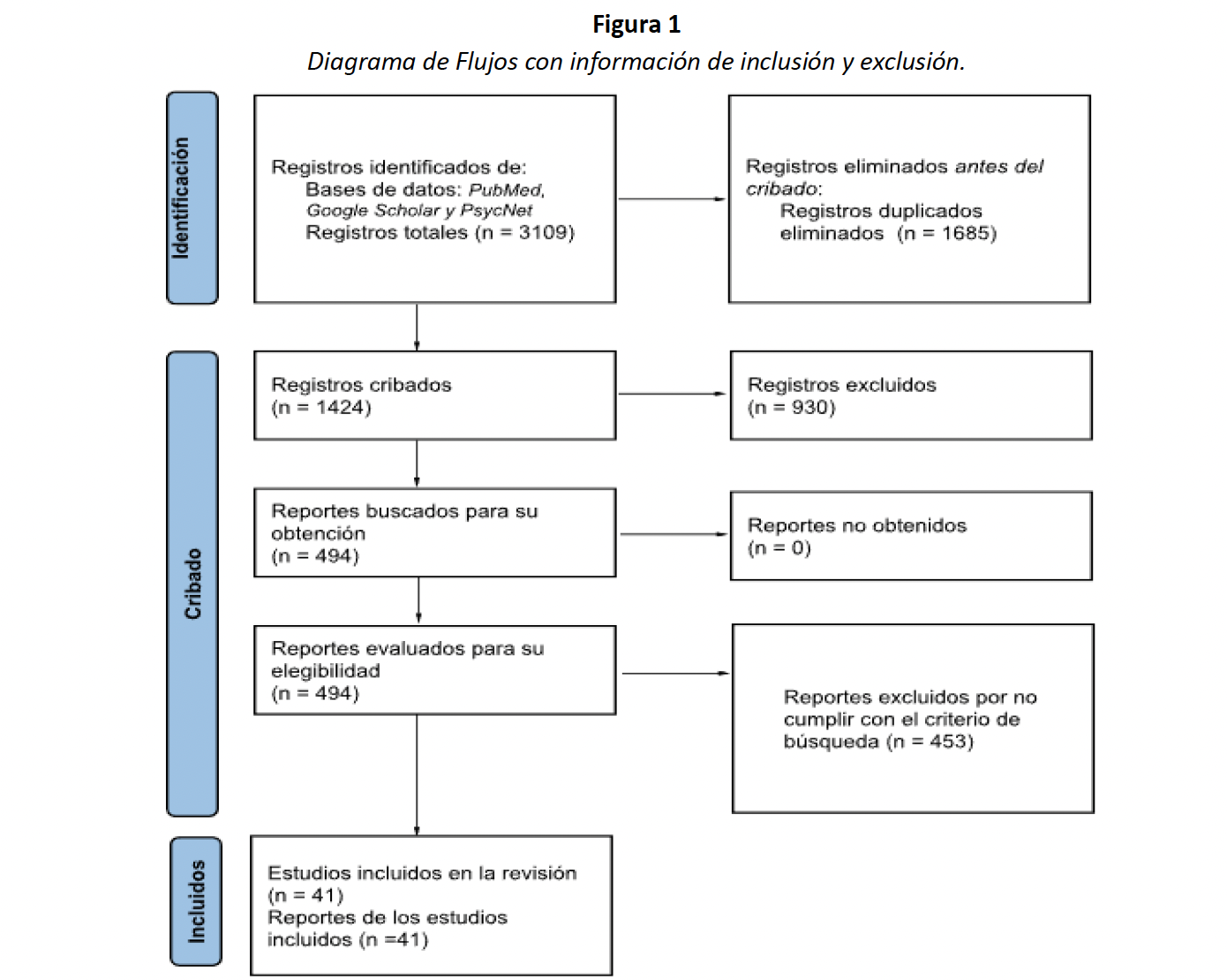
The aim of this study was to conduct a systematic review of empirical studies analyzing the relationship between Executive Functions (EF) and Cognitive Reappraisal (CR). The PRISMA methodology was used to select empirical articles that included both clinical and non-clinical populations, covering various age groups. In total, 41 studies were included, which indicate that CR has a positive impact on mental health. However, there is heterogeneity of the results, partly due to the lack of precision in the measures used to assess EF. Additionally, it was observed that both EF and CR are affected in clinical populations. Among the EF components, Inhibitory Control has been the most studied, while Working Memory has shown the strongest relationship with CR. It is suggested that future research should explore each EF component individually to gain greater clarity on their specific relationships with CR.
Downloads
Published
How to Cite
Issue
Section
License
Copyright (c) 2025 Eliana Vanesa Zamora, Clementina Draper, Macarena del Valle

This work is licensed under a Creative Commons Attribution-NonCommercial-ShareAlike 4.0 International License.
Articles published in this journal are protected under the Creative Commons Attribution-NonCommercial-ShareAlike 4.0 International (CC BY-NC-SA 4.0) license. This means that authors retain full rights over their research and publications at all times. As a journal, we fully respect and promote the principles of open access established by this license, allowing the work to be shared, adapted, and distributed for non-commercial purposes, provided that appropriate credit is given to the authors and any derivative works are licensed under the same terms.
Authors are responsible for obtaining the required permission when they wish to reproduce part of the material (figures, etc.) from other publications.
Likewise, CNPs allows authors to host in their personal sites or other repositories that they deem convenient the Final and Definitive Version of the published article with the format assigned by the journal. In no case do we allow access to preprints of the article under evaluation or already published.
When submitting an article to CNPs you are aware that all the contents of CNPs are under a Creative Commons License. In which it is allowed to copy and share the contents freely, always making reference to the origin of the publication and its author.