COMPREHENSIVE BEHAVIORAL INTERVENTION FOR TICS (CBIT) IN ADOLESCENTS WITH TOURETTE SYNDROME: A CLINICAL CASE STUDY
Abstract
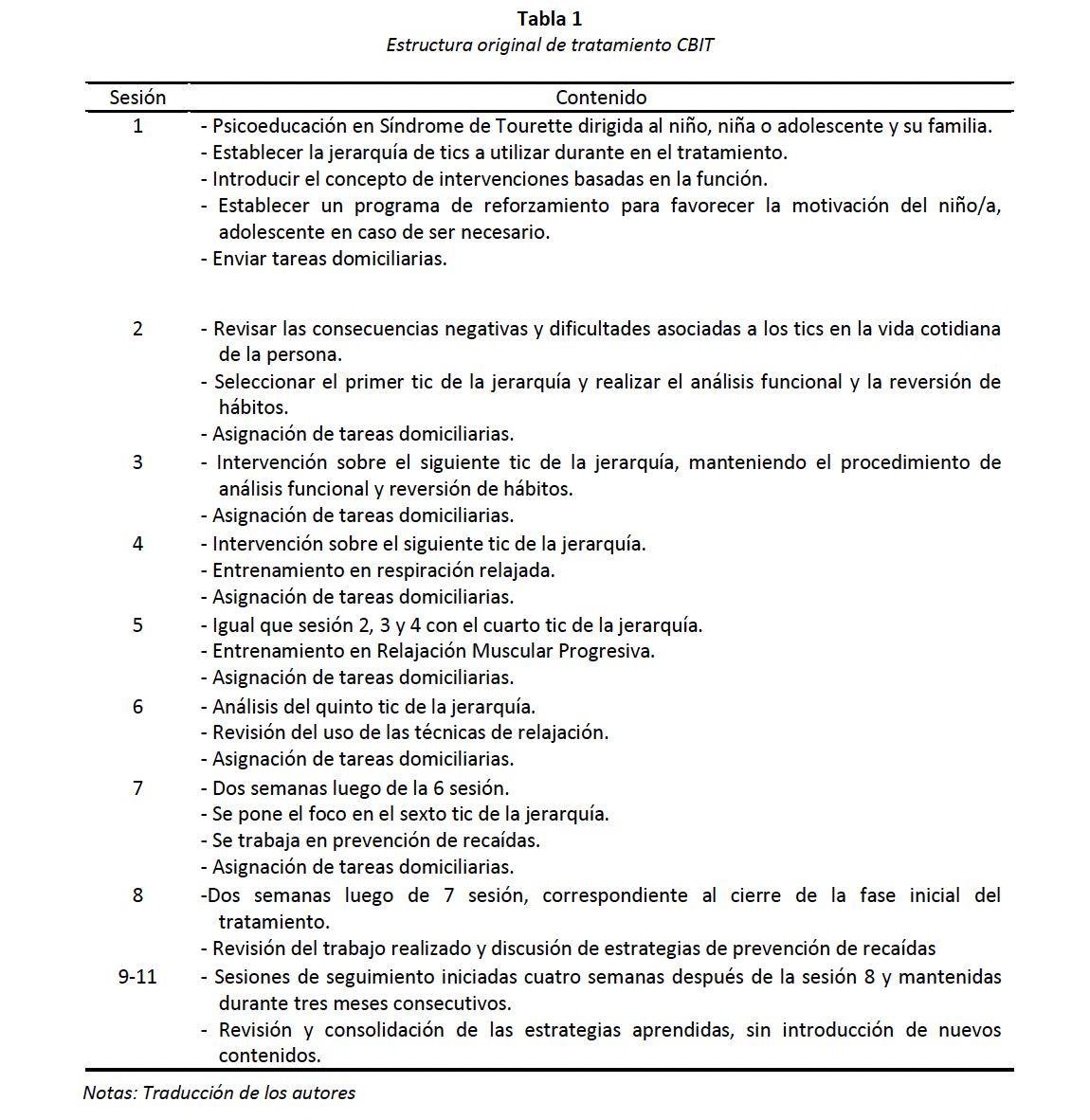
This case study analyzes the application of Comprehensive Behavioral Intervention for Tics (CBIT) in an adolescent with Tourette Syndrome. CBIT, structured into 11 sessions, includes psychoeducation, tic awareness, competing response training, and relaxation techniques. An initial assessment was conducted to establish a baseline of tic frequency and their impact on daily life. During the intervention, strategies were tailored to the participant’s age and needs, with continuous progress monitoring. Results showed a significant reduction in tic frequency and intensity, as well as improvements in self-awareness and stress management. Motivation and treatment adherence were key factors in the program’s effectiveness. Challenges in adolescent intervention are discussed, highlighting the importance of flexibility in CBIT implementation to maximize its benefits. This case reinforces evidence on CBIT’s efficacy and the need for individualized adaptations in its application.
Downloads
Published
How to Cite
Issue
Section
License
Copyright (c) 2025 Malena Sancristobal Branaa , Ignacio Navarrete Antola

This work is licensed under a Creative Commons Attribution-NonCommercial-ShareAlike 4.0 International License.
Articles published in this journal are protected under the Creative Commons Attribution-NonCommercial-ShareAlike 4.0 International (CC BY-NC-SA 4.0) license. This means that authors retain full rights over their research and publications at all times. As a journal, we fully respect and promote the principles of open access established by this license, allowing the work to be shared, adapted, and distributed for non-commercial purposes, provided that appropriate credit is given to the authors and any derivative works are licensed under the same terms.
Authors are responsible for obtaining the required permission when they wish to reproduce part of the material (figures, etc.) from other publications.
Likewise, CNPs allows authors to host in their personal sites or other repositories that they deem convenient the Final and Definitive Version of the published article with the format assigned by the journal. In no case do we allow access to preprints of the article under evaluation or already published.
When submitting an article to CNPs you are aware that all the contents of CNPs are under a Creative Commons License. In which it is allowed to copy and share the contents freely, always making reference to the origin of the publication and its author.