NEUROCOGNITIVE HETEROGENEITY IN BORDERLINE PERSONALITY DISORDER: THE ROLE OF CHILDHOOD SEXUAL ABUSE
Abstract
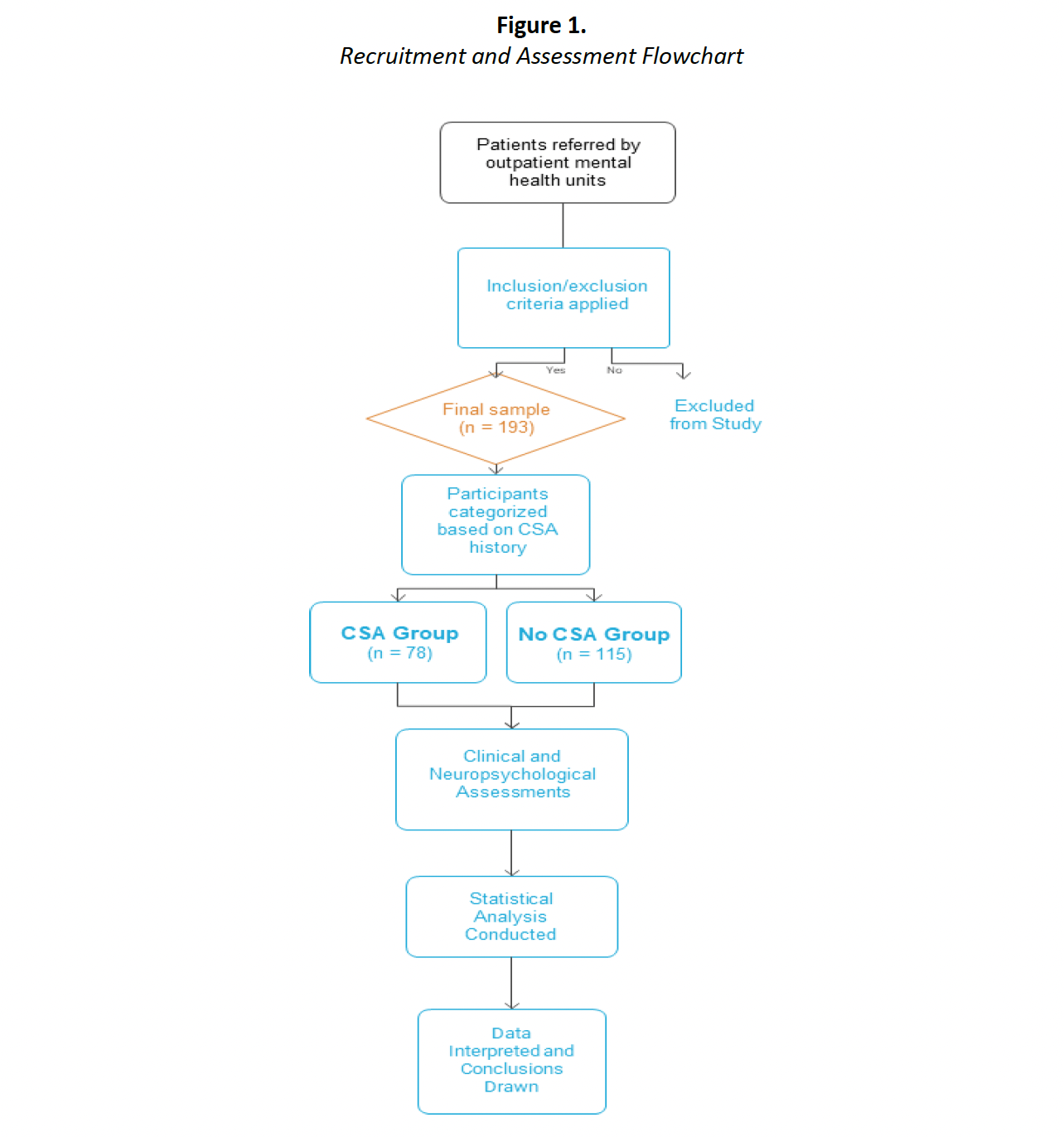
Childhood sexual abuse (CSA) is strongly associated with borderline personality disorder (BPD). This cross-sectional study investigated clinical and neurocognitive differences in 193 women aged 20 to 39 years diagnosed with BPD, comparing those with a history of CSA (n = 78) and those without (n = 115). Participants completed standardized psychometric and neuropsychological assessments focused on impulsivity, core BPD symptoms, and cognitive functioning. Women with CSA showed greater clinical severity, including higher rates of self-harm, suicide attempts, dissociative and psychotic symptoms, along with elevated impulsivity and attention-deficit/hyperactivity disorder (ADHD)–related traits. Neuropsychological testing revealed significant deficits in attention, processing speed, and cognitive flexibility, along with lower performance on Stroop tasks assessing divided attention and interference control. While working memory and verbal fluency differences remained within normative ranges, age-stratified analysis revealed marked long-term memory impairments in the CSA group aged 30–39. These results suggest that neurocognitive deficits in BPD are not universal but may reflect the cumulative impact of early trauma and age. Trauma-informed assessment and tailored cognitive interventions may support more accurate profiling and inform tailored therapeutic strategies in this high-risk subgroup.
Keywords: Borderline personality disorder; Childhood sexual abuse; Executive functions; Verbal memory; Emotional dysregulation.
Downloads
Additional Files
Published
How to Cite
Issue
Section
License
Copyright (c) 2026 Horus Laffite Cabrera, Fernando Rodríguez-Otero, Raquel Alonso-Sosa, José L. Hernández-Fleta, María F. Martínez-Huidobro, Juan Antonio Díaz-Garrido

This work is licensed under a Creative Commons Attribution-NonCommercial-ShareAlike 4.0 International License.
Articles published in this journal are protected under the Creative Commons Attribution-NonCommercial-ShareAlike 4.0 International (CC BY-NC-SA 4.0) license. This means that authors retain full rights over their research and publications at all times. As a journal, we fully respect and promote the principles of open access established by this license, allowing the work to be shared, adapted, and distributed for non-commercial purposes, provided that appropriate credit is given to the authors and any derivative works are licensed under the same terms.
Authors are responsible for obtaining the required permission when they wish to reproduce part of the material (figures, etc.) from other publications.
Likewise, CNPs allows authors to host in their personal sites or other repositories that they deem convenient the Final and Definitive Version of the published article with the format assigned by the journal. In no case do we allow access to preprints of the article under evaluation or already published.
When submitting an article to CNPs you are aware that all the contents of CNPs are under a Creative Commons License. In which it is allowed to copy and share the contents freely, always making reference to the origin of the publication and its author.