BRAIN, GENES, AND BIOGRAPHY: A NEUROPSYCHOLOGICAL AND INTEGRATIVE PERSPECTIVE ON PERSONALITY
Abstract
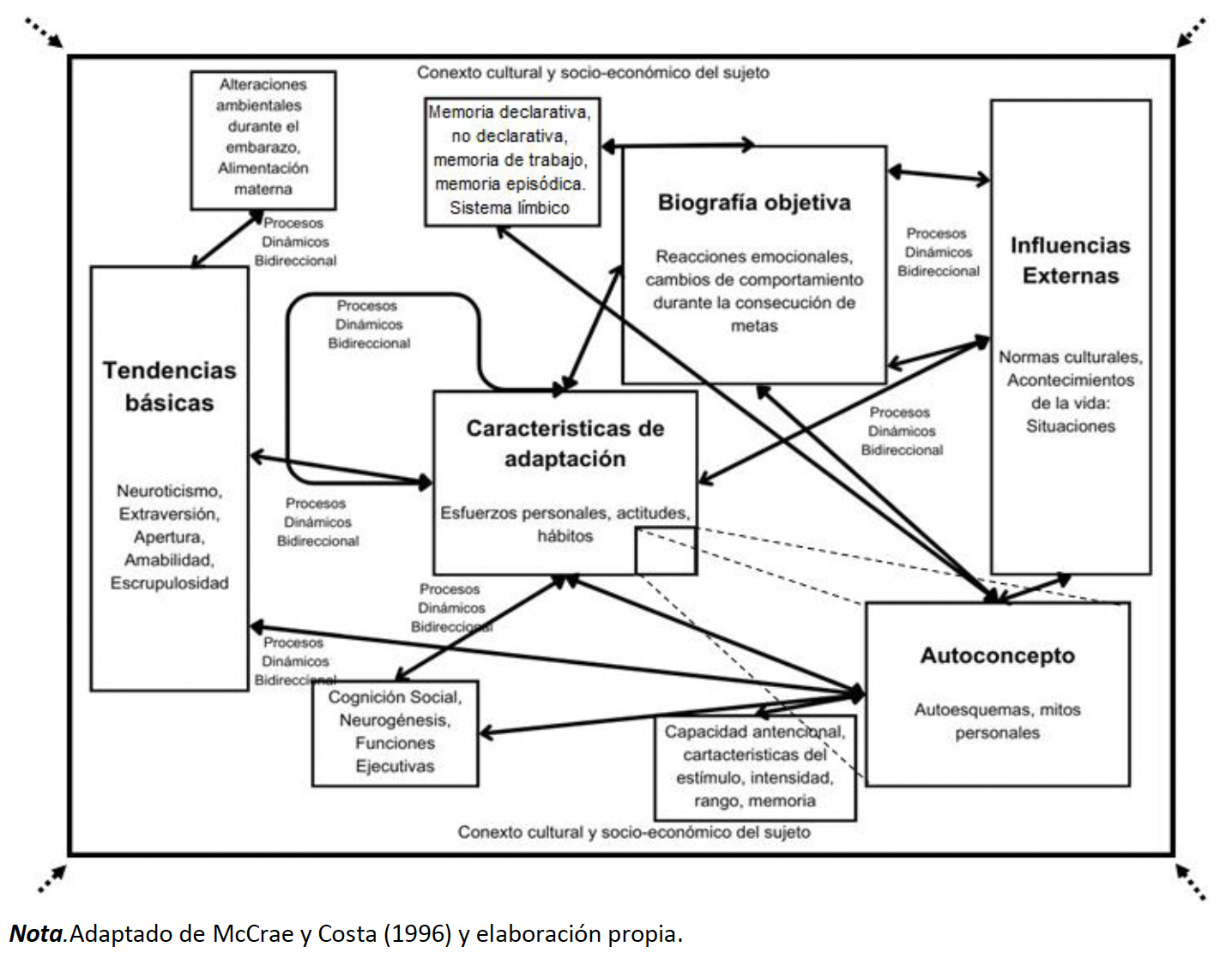
This article provides a thoughtful exploration of how recent advances in cognitive neuropsychology are transforming our understanding of personality. Taking a cognitive-integrative perspective, it delves into the evolution of major personality theories and bridges these ideas with the neuroanatomical foundations of essential cognitive functions, such as memory, attention, executive skills, and social cognition. It emphasizes the dynamic, two-way relationship between cognitive functions and personality—a relationship deeply shaped by each person’s cultural and socio-historical experiences. The discussion also introduces epigenetics as a critical piece of this puzzle, showing how environmental factors like stress, nutrition, and formative life experiences can influence brain development, emotional regulation, and, ultimately, how personality traits are expressed. By humanizing these connections, the article underscores that personality is not static; it is a living, adaptive phenomenon, constantly evolving through the interaction of biology, environment, and experience. This integrated view offers a richer, more empathetic understanding of what makes each individual unique.
Keywords: Cognitive neuropsychology; Personality; Integrative psychotherapy.
Published
How to Cite
Issue
Section
License
Copyright (c) 2026 Emanuel Pompilio, Anna Rovella, Marcos Jofré Neila

This work is licensed under a Creative Commons Attribution-NonCommercial-ShareAlike 4.0 International License.
Articles published in this journal are protected under the Creative Commons Attribution-NonCommercial-ShareAlike 4.0 International (CC BY-NC-SA 4.0) license. This means that authors retain full rights over their research and publications at all times. As a journal, we fully respect and promote the principles of open access established by this license, allowing the work to be shared, adapted, and distributed for non-commercial purposes, provided that appropriate credit is given to the authors and any derivative works are licensed under the same terms.
Authors are responsible for obtaining the required permission when they wish to reproduce part of the material (figures, etc.) from other publications.
Likewise, CNPs allows authors to host in their personal sites or other repositories that they deem convenient the Final and Definitive Version of the published article with the format assigned by the journal. In no case do we allow access to preprints of the article under evaluation or already published.
When submitting an article to CNPs you are aware that all the contents of CNPs are under a Creative Commons License. In which it is allowed to copy and share the contents freely, always making reference to the origin of the publication and its author.