ÁLCOOL NO EQUADOR: IMPACTOS SOCIAIS E DE SAÚDE PÚBLICA E POLÍTICAS EMERGENTES
Resumo
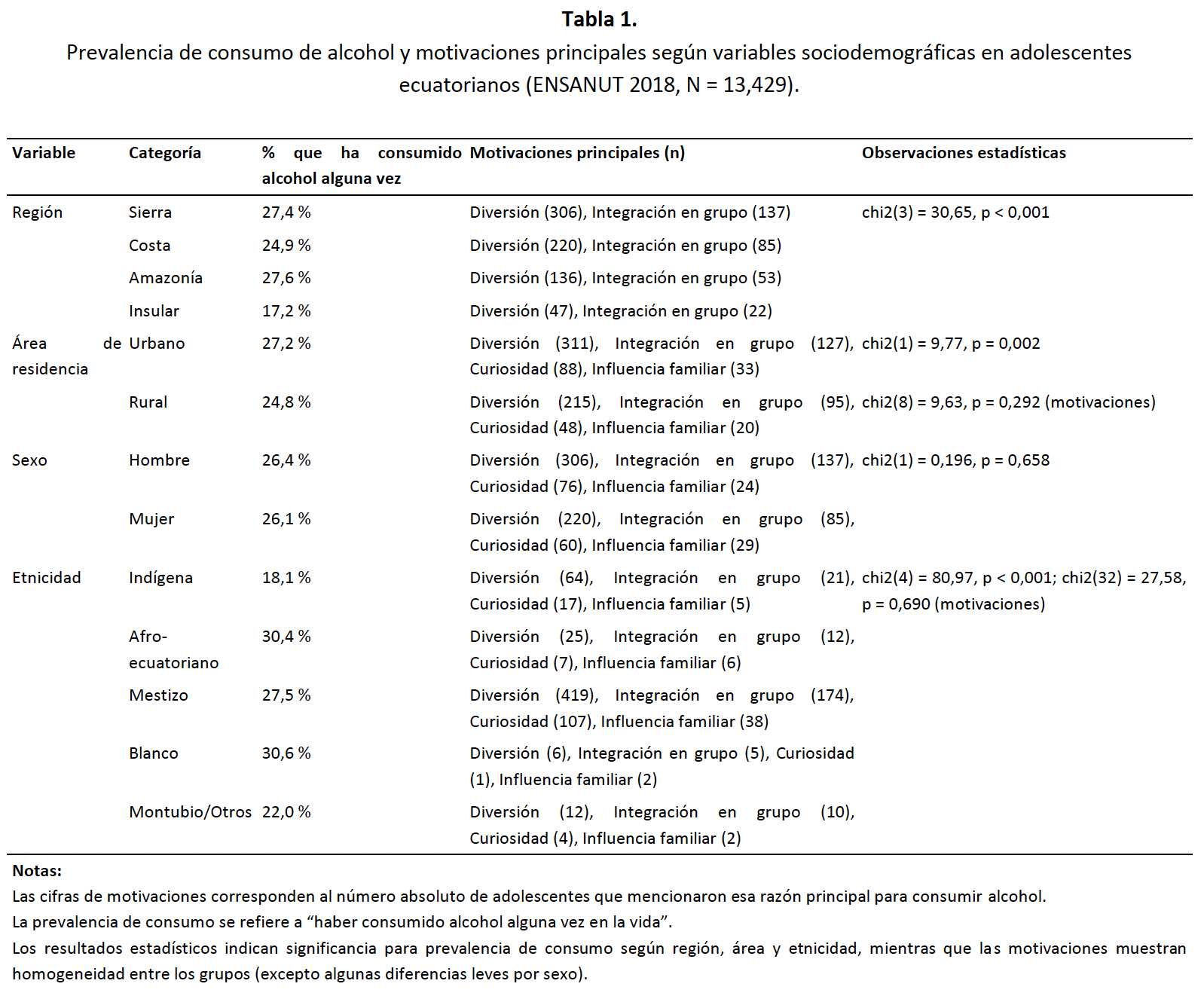
Alcohol consumption in Ecuador constitutes a major public health problem, with significant social, economic, and health implications. This study examines the social, cultural, and economic determi-nants of alcohol consumption, as well as the effectiveness of implemented public policies, using data from the National Health and Nutrition Survey (ENSANUT 2018), the Fourth National Survey on Drug Use, and regional and international scientific literature. The results show that alcohol exposu-re during adolescence is strongly influenced by structural factors such as region of residence, urban or rural setting, ethnicity, and educational level, while the primary motivations for consumption include recreation, social integration, and curiosity. Prevalence of alcohol use is higher among ol-der adolescents, in urban areas, and among Mestizo, White, and Afro-Ecuadorian groups, reflecting the interaction between social and cultural determinants. Policy analysis using the WHO SAFER fra-mework indicates that, although Ecuador has a solid legal framework, the practical effectiveness of its measures is limited. Restrictions on availability, blood alcohol concentration controls, early de-tection programs, and taxation face challenges related to uneven implementation, insufficient co-verage, and informal markets. Regulation of alcohol advertising is moderate, with significant gaps in digital media. Integration of regional and international evidence indicates that these patterns and challenges are consistent across Latin America, reinforcing the need for multisectoral, human-rights-based interventions. This study underscores the urgency of strengthening policy implementation, adapting strategies to modern sociocultural and technological contexts, and promoting preventive and community-based interventions to reduce harmful alcohol consumption, particularly among adolescents and vulnerable populations.
Downloads
Publicado
Como Citar
Edição
Secção
Licença
Direitos de Autor (c) 2025 José Ignacio Nazif-Munoz

Este trabalho encontra-se publicado com a Licença Internacional Creative Commons Atribuição-NãoComercial-CompartilhaIgual 4.0.
Os artigos publicados nesta revista estão protegidos pela licença Creative Commons Attribution-NonCommercial-ShareAlike 4.0 International (CC BY-NC-SA 4.0). Isso significa que os autores mantêm todos os direitos sobre suas pesquisas e publicações em todos os momentos. Como revista, respeitamos e promovemos integralmente os princípios de acesso aberto estabelecidos por essa licença, permitindo que o trabalho seja compartilhado, adaptado e distribuído para fins não comerciais, desde que seja dado o devido crédito aos autores e que quaisquer trabalhos derivados sejam licenciados sob os mesmos termos.
Os autores são responsáveis por obter a permissão necessária quando desejarem reproduzir parte do material (figuras, etc.) de outras publicações.
Da mesma forma, o CNPs permite que os autores hospedem a Versão Final e Definitiva do artigo publicado, no formato designado pela revista, em seus sites pessoais ou em outros repositórios que considerem adequados. Em nenhuma hipótese permitimos o acesso a preprints do artigo em avaliação ou já publicado.
Ao submeter um artigo à CNPs, você está ciente de que todo o conteúdo da CNPs está licenciado sob uma Licença Creative Commons. Na qual é permitido copiar e compartilhar o conteúdo livremente, sempre fazendo referência à origem da publicação e ao seu autor.